

What is Astroturfing?
noun
as·tro·turf·ing ˈa-strə-ˌtər-fiŋ -ˌstrō-
the deceptive practice of presenting an orchestrated marketing or public relations campaign in the guise of unsolicited comments from members of the public.
What’s a troll farm?
Employees of trollfarms aka troll factories create fake identities and profiles on social media that they use for astroturfing. These accounts need to create an impression of authenticity; thus, materials that go towards making a fictional profile credible, such as pictures and comments on a private life, are often published.
The profiles feature images modified to deceive search engines and humans alike. Since the troll factory employs hundreds or thousands of people and each employee has multiple accounts, it is easy to create a network of connected fake profiles which creates the impression of a real one. The longer the given accounts are maintained, the easier it is to create the illusion of reality. People employed in troll factories often work in shifts to ensure that the work they produce is published on a 24-hour basis.
What do troll factories produce?
Products of troll factories include: fake social media profiles, supporting websites are created to support trolling operations; posts published in social media as well as on websites, blogs etc.
Troll factory employees not only create messages, but they also respond to comments and take part in online discussions. They can simulate disputes or raise specific perspectives or keywords in order to increase an impression of a false reality which they disseminate the content that they create.
Not all troll farms are Russian. In October 2004, the local CCP Propaganda Department of Changsha started hiring “Internet Commentators”, and in March 2005, the Ministry of Education of the People's Republic of China enacted a systematic censorship of Chinese college bulletin board systems which led to the creation of China’s 50 Cent Party. At the end of this article there is a discussion of American astroturfing endeavors.
In Mexico: the Peñabots; in India: the BJP’s army; and in Britain: the 77th Brigade); however, the Russian troll factories have been the busiest.
Yevgeny Prigozhin, head of the Russian private military company Wagner, admitted on Tuesday, February 14, 2023 to founding the Internet Research Agency, a notorious troll farm that the US government has sanctioned for interfering in American elections.
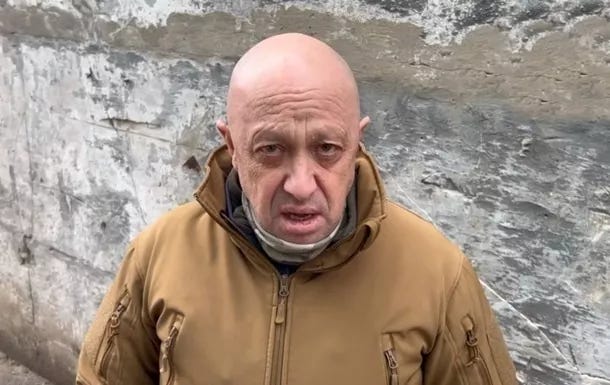
Prigozhin said in a statement, “I’ve never just been the financier of the Internet Research Agency. I invented it, I created it, I managed it for a long time. It was founded to protect the Russian information space from boorish aggressive propaganda of anti-Russian narrative from the West.”
In an effort to further polarize America ahead of the 2016 election, the IRA posted from accounts offering commentary on every side of the biggest social and cultural issues of the day.
The demise of the influential Internet Research Agency came just a week after its founder led his Wagner mercenary organization on a mutiny that ended just outside of Moscow as part of a deal where Prigozhin was exiled to Belarus.
Since then, Russian authorities have moved to strip Prigozhin of both his influence and his finances, and The Moscow Times reported last week that with Prigozhin gone the Internet Research Agency, now called the Patriot Media Group, was looking for new management.
Their work has been paralyzed since police raided their St. Petersburg headquarters during Wagner’s march toward Moscow on Saturday, the business news website The Bell reported, citing current and former employees. “There’s no more central management,” The Bell quoted an anonymous Prigozhin staffer as saying.
Russia has also blocked Prigozhin’s main media outlet RIA FAN, which is part of the Patriot media group. Patriot’s de facto director Ilya Gorbunov was in negotiations with potential buyers earlier this week until he abruptly disappeared, The Bell said.
The National Media Group was identified as one of Patriot’s potential buyers. NMG was founded by billionaire banker Yury Kovalchuk, a close friend of President Vladimir Putin’s. Its board is chaired by retired Olympic gymnast and Putin’s rumored mistress Alina Kabaeva.
The Bell said all of its sources believed Patriot “will now be directly supervised by the presidential administration” regardless of its formal owner. Over the weekend, Reuters reported that the infamous troll farms were being officially disbanded. No word on whether they will reappear in Belarus, or under a new name in Moscow.
The United States had levied sanctions against the Internet Research Agency beginning in 2018, accusing the group of creating and managing numerous fake online social media accounts, some of which posed as "legitimate" grassroots organizations, interest groups, and even a state political party.
Those accounts organized political rallies and engaged in identity theft, using personal information belonging to US citizens to open bank and credit card accounts to fund the agency's operations. The US Treasury Department said the effort reached "millions of people."
One account identified on twitter as belonging to the IRA accused the Ukrainian military of using civilians as human shields and portrayed Ukraine as provoking Russia at the behest of its NATO masters. Both tweets received hundreds of likes and retweets.
Russia has been using social media platforms to attack political enemies since at least 2013 under the auspices of the IRA, according to a US Senate Intelligence Committee report, and professionalized trolling remains a force in domestic Russian propaganda efforts. IRA continues to adapt across new platforms.
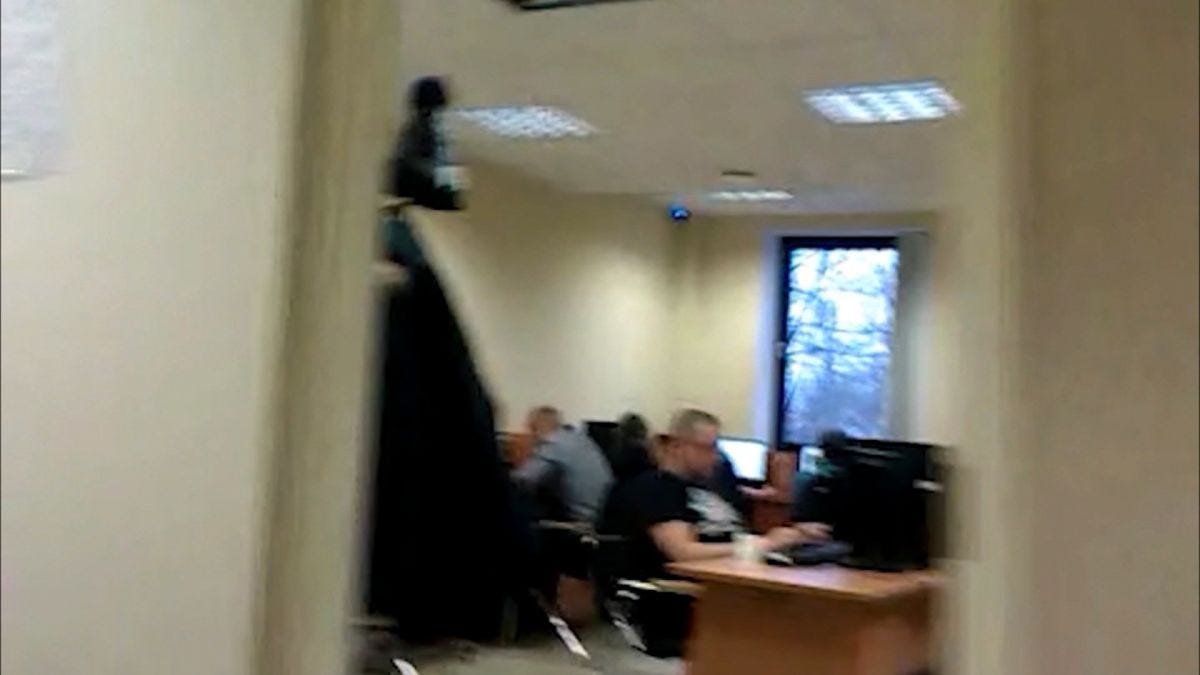
Online operatives were ordering followers to target western media outlets and politicians, according to research funded by the UK government. Influencers were being paid to amplify pro-Kremlin narratives by legitimate social media users that happen to be consistent with the Kremlin’s viewpoint in order to evade social media platforms’ attempts to combat disinformation.
Another main activity is “web brigading” to steer attention of discussion on social media and in comments sections of newspapers towards favoured opinions. Manipulation of polls in western media included an attempt to skew the results of a survey on whether sanctions against Russia were supported.
Activities on Twitter and Facebook were detected, but were found to be particularly concentrated on Instagram, YouTube and TikTok. A Justice Department indictment from 2018 described an annual budget in the millions, with a management group that oversees various Internet Research Agency departments - graphics, search engine optimization, IT, and finance departments among them.
The trolls are told to watch American TV shows like House of Cards and are given grammar lessons. To hide their identity, trolls use proxy servers, communicate in English, and use fake identities to establish hundreds of accounts on Facebook, Instagram, TikTok, Twitter, and other social media. With time and a little savvy, the accounts gain followers.
The MIT Technology review reported on an internal facebook audit of astroturfing; revelations include:
As of October 2019, around 15,000 Facebook pages with a majority US audience were being run out of Kosovo and Macedonia, known bad actors during the 2016 election.
Collectively, those troll-farm pages—which the report treats as a single page for comparison purposes—reached 140 million US users monthly and 360 million global users weekly. Walmart’s page reached the second-largest US audience at 100 million.
The troll farm pages also formed:
the largest Christian American page on Facebook, 20 times larger than the next largest—reaching 75 million US users monthly, 95% of whom had never followed any of the pages.
the largest African-American page on Facebook, three times larger than the next largest—reaching 30 million US users monthly, 85% of whom had never followed any of the pages.
the second-largest Native American page on Facebook, reaching 400,000 users monthly, 90% of whom had never followed any of the pages.
the fifth-largest women’s page on Facebook, reaching 60 million US users monthly, 90% of whom had never followed any of the pages.
Troll farms primarily affect the US but also target the UK, Australia, India, and Central and South American countries.
Facebook has conducted multiple studies confirming that content more likely to receive user engagement (likes, comments, and shares) is more likely to be low quality content often designed to manipulate an audience; still, the company has continued to rank content in user’s newsfeeds according to what will receive the highest engagement.
Facebook forbids pages from posting content copied and pasted from other parts of the platform but does not enforce the policy against known bad actors, making it easy for foreign actors who do not speak the local language to post entirely copied content and still reach a massive audience. At one point, up to 40% of US page views went to those primarily featuring material with little originality.
Troll farms made their way into Facebook’s partnership programs, which were intended to help news organizations and other publishers monetize their articles and videos. At one point, thanks to a lack of basic quality checks, as many as 60% of article reads were going to content that had been plagiarized from elsewhere, making it easy for troll farms to mix in unnoticed, and even receive payments from Facebook for material they stole from legitimate US media organizations.
Many accounts linked to the IRA were espousing chemtrail conspiracies, while others speculated that the Federal Emergency Management Agency (FEMA) was planning to force people into camps as a plot to imprison Americans. Dozens speculated that real events, including a shootings in America and a gas attack in Syria, were "false flags," or staged events that meant to be a distraction.
Cyber Front Z, a troll farm operating out of an office front in St Petersburg, was banned from Meta's platforms in April of 2022 and the company shut down 45 Facebook accounts and 1,037 Instagram accounts associated with the group, per the report.”

Meta describes these efforts as clumsy and ineffective. A Senate Intelligence Report, however, said “on the basis of engagement and audience following measures, the Instagram social media platform was the most effective tool used by the IRA to conduct its information operations campaign."
Another tool used by Russian troll farms is 4chan. Less than two weeks after the first "Q" post appeared on 4chan, a Russia-backed troll account began amplifying the conspiracy theory on Twitter.

“The most recent election was very much driven by massive amounts of disinformation on the internet. Many of those consisted of fake images and memes originating from websites such as 4chan and 8chan,” Samantha North, a doctoral researcher at the University of Bath specializing in disinformation and memetic warfare, told Mental Daily. According to North, memes are powerful tools used for disinformation, as they are more likely to be perceived as true and users react to them quicker than words.
In late-2017, it was widely reported in the mainstream media that a troll factory in St. Petersburg, Russia utilized 4chan-style memes on Facebook to try and influence activists in the US. Did the Russian-based troll factory, the Internet Research Agency, study alt-right groups like 4chan or collaborate with them to conduct psychological warfare on Americans?
“I think 4chan, as a notorious outlet for images of this sort, would have likely been a key source for anyone looking for material to influence the election,” said North.
A report in Wired published in March said that Japanese Toy Company Good Smile has supported 4chan financially for years, reportedly putting millions of dollars into the anonymous image board. Good Smile is working to end its ongoing deal with 4chan, as apparently the toy company’s major working partner Disney is trying to end its relationship over the connection, which would decimate Good Smile.
On the American side,
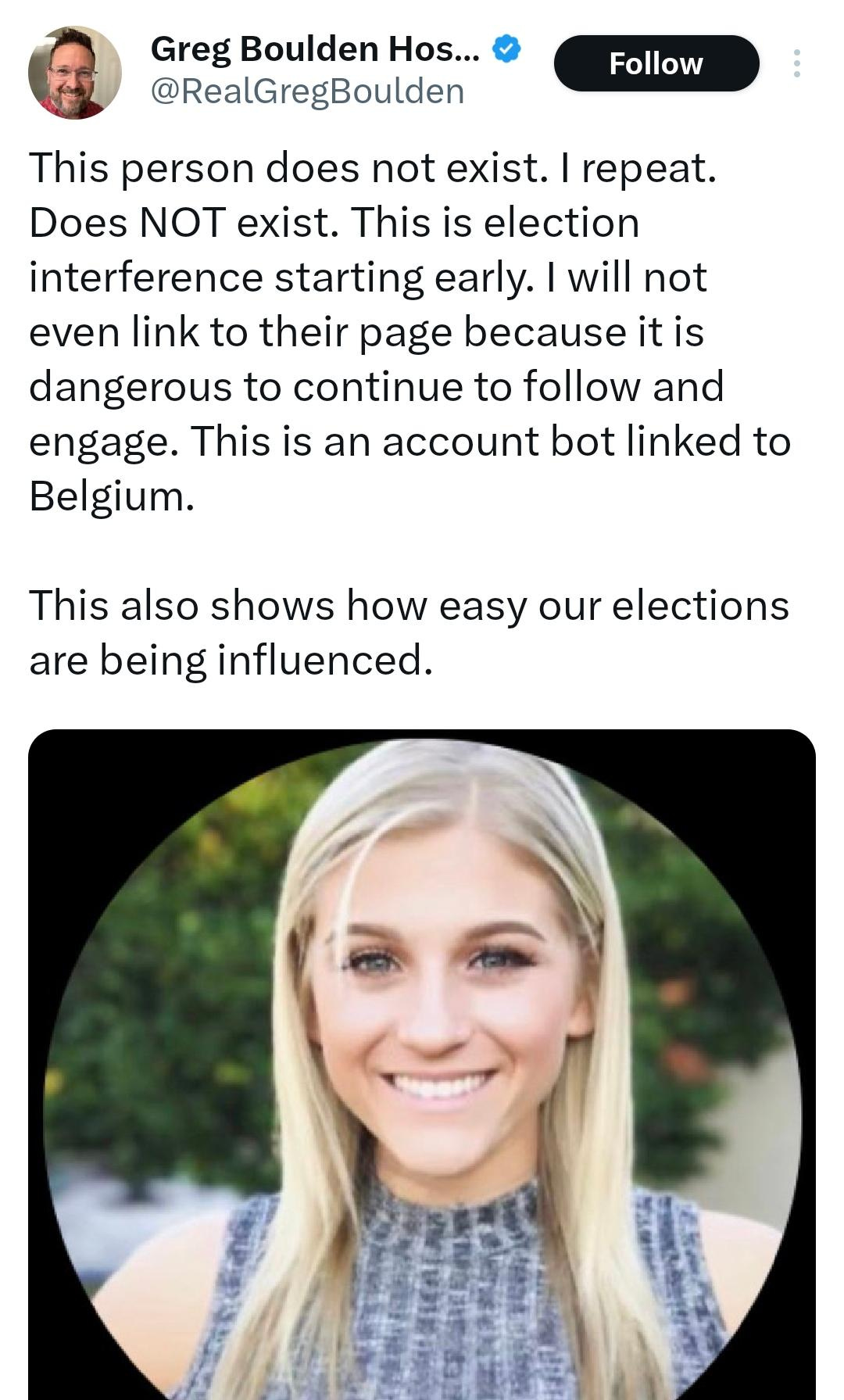
The person in the account highlighted above seemed to be a Westerner, or at least had a native fluent understanding of the political ideologies of the United States and how to inflame them. The link to Belgium is shakey; much more solid is the link to so called “rage bait”, manipulating users to respond to offensive, inflammatory "headlines", memes, tropes, or comments.
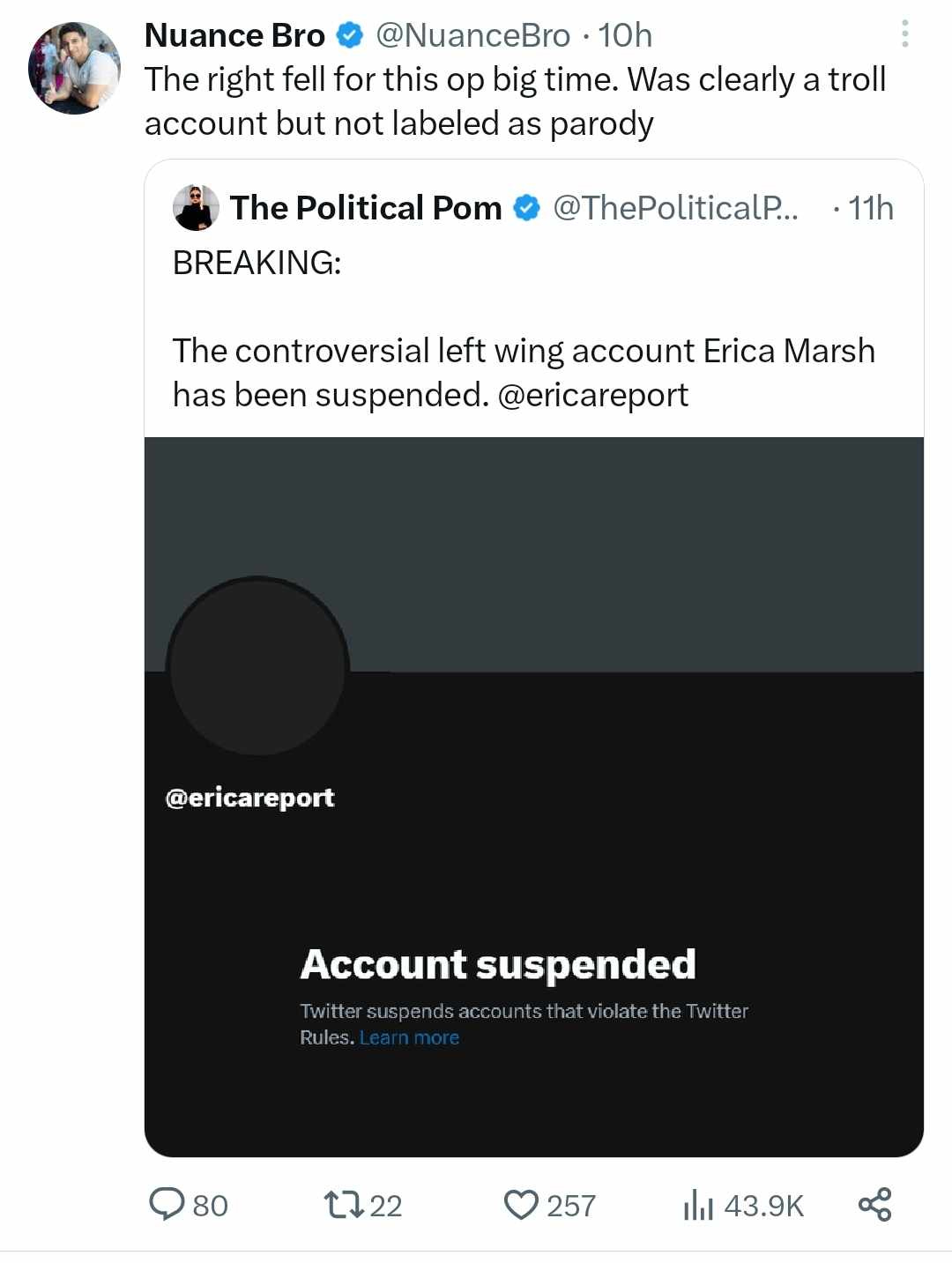
Various incarnations of this have been discovered via patents, military contracts, the leaked e-mail discussions of intelligence contractors, and in the wild on the internet, places like Facebook and Twitter, even YouTube.
Software offers western intelligence agencies what’s known as “Persona management” to facilitate the use of multiple fake online personas, or "sockpuppets," for propaganda, disinformation, or as a surveillance method via social interactions. Much of this was exposed by journalist Barrett Brown through his Project PM (no relation) by way of Anonymous hackers stealing emails.
Patent 20090313274 is an apparent joint effort by IBM and the U.S. military (four members of which are listed as inventors), and describes a reasonably advanced persona management system, or at least a component thereof, providing software-based linguistic capabilities in order to retain "linguistic integrity" from conversation to conversation.
DARPA's July 2011 BAA (Broad Agency Announcement) entitled Social Media in Strategic Communications indicates that such software will increasingly form a broad programmatic area of military operations.
Millions of e-mails have been stolen from the contracting firms like HBGary, strategic intelligence company Stratfor, Cubic Corporation/Ntrepid/Abraxas, C5i, Mantech, and the USAF, the United States Air Force, which was revealed to have requested bids for persona management software by which a single operator could oversee the conversations and other interactions between up to ten fake, software-assisted personas and the online public.
CENTCOM (Central Command) later admitted to using such capabilities abroad, but denies using them in the English language or in a way that would explicitly target U.S. citizens.
HBGary and HBGary Federal were hacked by Anonymous operatives in retaliation for an executives boasts to the Financial Times that he had identified the movement's “leadership;” Barr resigned as CEO a few weeks later. An investigation into HBGary revealed the contractor had bid on a contract with the USAF to develop the persona software for apparent propaganda and/or infiltration purposes.
Russia’s troll farms were already well underway when this process started in the west, which coincides with a period that terminal internet users refer to as The Great Meme Wars, which grew out of earlier 4chan related events: Operation Chanology, LulzSec, the weaponization of Anonymous by foreign actors, the Battle of 2011, aka the Pony Wars, and the rapid escalation of rudimentary Russian troll farms - called web brigades, dating back to the late 2000’s - into an industrialized destabilization operation aimed at the west.